

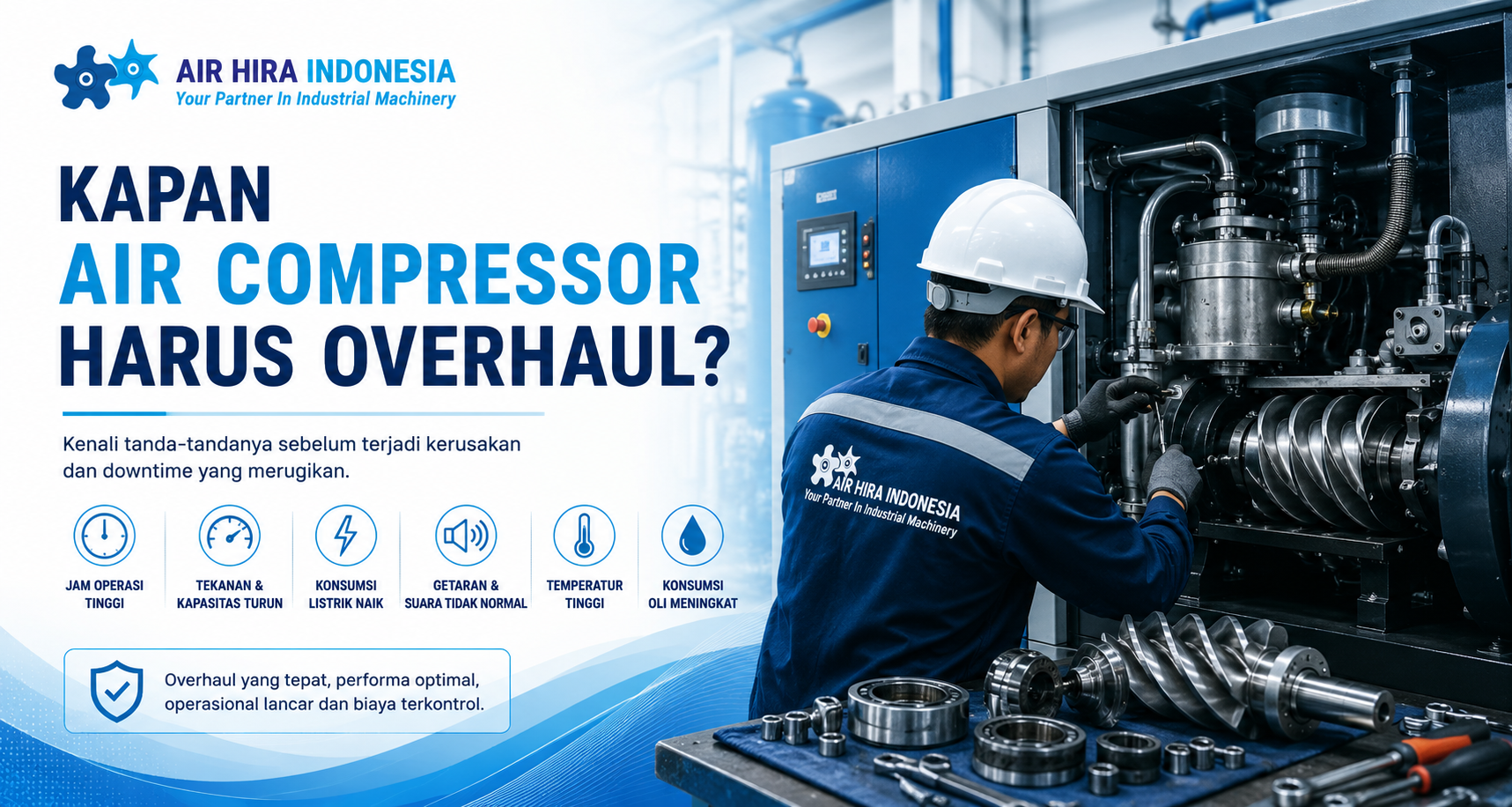

An air compressor is one of the most critical assets in industrial operations. As operating hours increase, internal components gradually wear out, causing a decline in performance. If left unaddressed, this can lead to unexpected downtime, higher energy consumption, and costly equipment failures.
So, when is the right time to overhaul an air compressor?
Here are the key warning signs every purchasing team, utility manager, and plant operator should know.
1. The Compressor Has Reached Its Recommended Overhaul Interval
Every compressor manufacturer provides a recommended overhaul interval based on running hours or operating conditions.
In most cases, an overhaul should be performed once the compressor reaches its specified service interval or when inspection results indicate significant component wear.
Best Practice: Always follow the manufacturer’s maintenance schedule and review the equipment’s service history.
2. Air Pressure and Capacity Are Decreasing
If your compressor takes longer to reach operating pressure or delivers less compressed air than before, it may indicate wear in critical components such as the airend, bearings, or rotors.
Reduced performance forces the compressor to work harder to meet production demand.
3. Energy Consumption Continues to Increase
A worn compressor typically requires more electrical power to produce the same amount of compressed air.
If your electricity costs continue to rise without any increase in production demand, it’s time to inspect the compressor’s condition.
4. Excessive Vibration or Unusual Noise
Abnormal vibration, grinding sounds, or excessive noise are common indicators of worn bearings, damaged couplings, gearbox issues, or airend problems.
Ignoring these symptoms can lead to severe mechanical failures and costly repairs.
5. High Operating Temperature
Frequent high discharge temperature or high oil temperature alarms may indicate reduced cooling efficiency or excessive wear of internal components.
If temperature alarms continue to occur despite regular maintenance, an overhaul may be necessary.
6. Increased Oil Consumption
Excessive oil consumption or oil carryover into the compressed air system may indicate worn seals, bearings, or internal airend components.
Besides increasing operating costs, this issue can also affect compressed air quality and downstream equipment.
Don’t Wait Until the Compressor Breaks Down
Many companies postpone overhauls until the compressor experiences a complete failure. Unfortunately, emergency repairs are often far more expensive than scheduled maintenance.
A planned overhaul helps minimize unplanned downtime, prevent production losses, and reduce unexpected repair costs.
Regular inspections and condition monitoring allow maintenance teams to determine the ideal time for an overhaul before major failures occur.
A Timely Overhaul Protects Your Investment
An overhaul is more than simply replacing worn components—it restores compressor performance, improves energy efficiency, and extends equipment lifespan.
By performing an overhaul at the right time, companies can improve system reliability, reduce maintenance costs, and ensure continuous production.
PT Air Hira Indonesia provides professional services for air compressor inspection, preventive maintenance, airend overhaul, compressor overhaul, performance testing, and commissioning for a wide range of industrial air compressor brands. Our experienced technicians are ready to help keep your compressed air system operating reliably, efficiently, and at peak performance.