

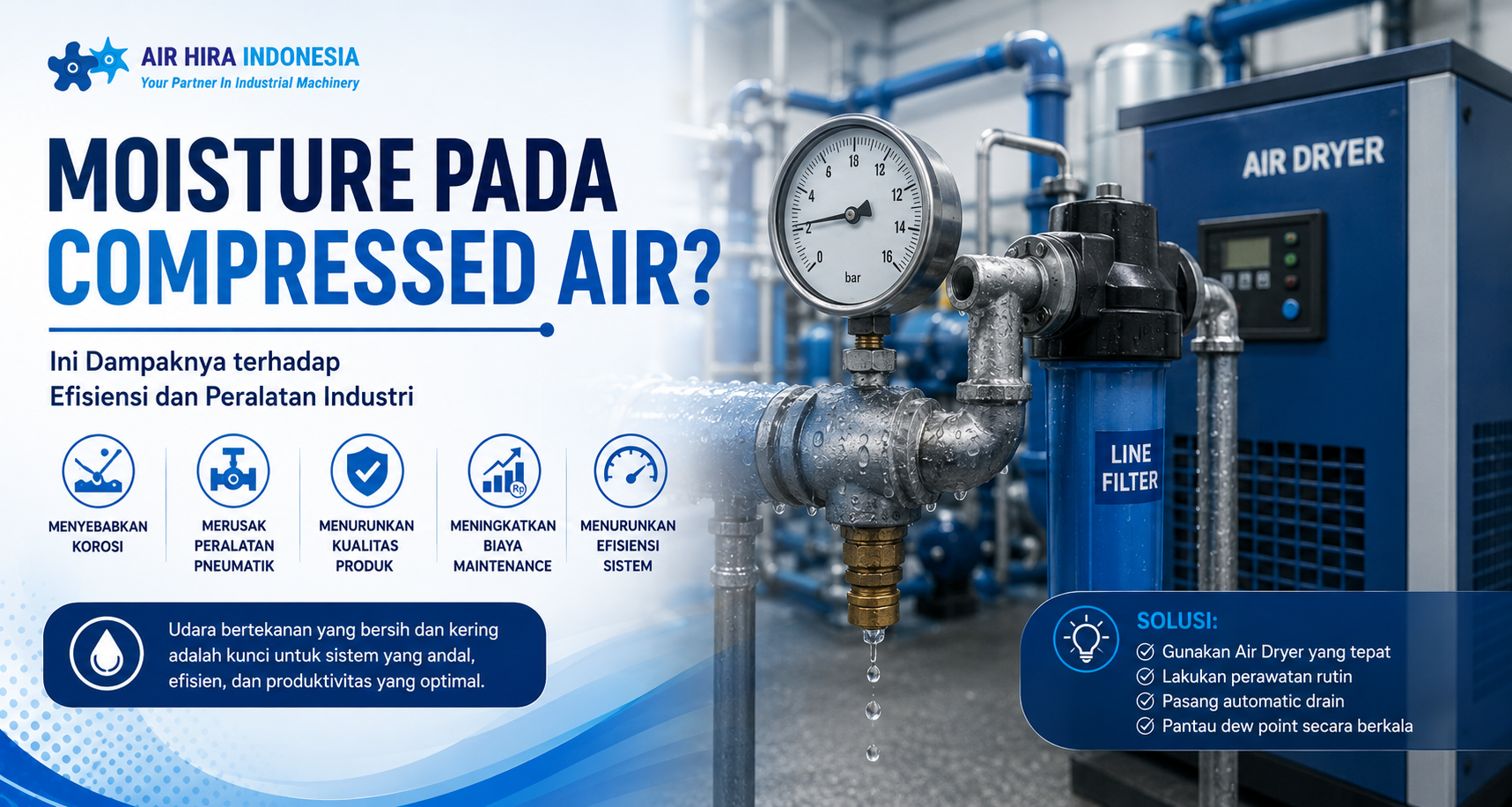

Many companies focus on air compressor capacity and pressure but often overlook one critical factor—moisture in compressed air. Excess moisture can lead to equipment damage, poor product quality, increased maintenance costs, and reduced system efficiency.
For purchasing teams, utility managers, and plant operators, understanding the impact of moisture is essential to maintaining a reliable and energy-efficient compressed air system.
1. Causes Corrosion in Piping and Equipment
When air is compressed, the concentration of water vapor increases. Without proper air treatment, this moisture condenses into water inside the piping system.
This can result in:
- Corrosion inside pipelines
- Rust formation in air receiver tanks
- Reduced equipment lifespan
Corrosion particles may also travel through the compressed air system, contaminating downstream equipment and production processes.
2. Damages Pneumatic Equipment
Moisture can enter pneumatic valves, cylinders, actuators, and other air-powered equipment.
This may cause:
- Unstable actuator movement
- Sticking valves
- Premature seal wear
- Increased maintenance frequency
The higher the moisture content, the greater the risk of equipment failure.
3. Reduces Product Quality
In industries such as food and beverage, pharmaceuticals, electronics, automotive, and manufacturing, compressed air quality directly affects product quality.
Moisture contamination can lead to:
- Product contamination
- Paint defects and poor surface finishing
- Lower production quality
This is why many industries require compressed air that meets specific air quality standards.
4. Increases Maintenance Costs
Excess moisture forces filters, air dryers, valves, and other system components to work harder than intended.
As a result:
- Filters require more frequent replacement.
- Maintenance costs increase.
- Equipment downtime becomes more frequent.
Investing in the right air treatment system is far more cost-effective than paying for repeated repairs.
5. Reduces Compressed Air System Efficiency
Moisture can increase pressure drop throughout the compressed air network, making air distribution less efficient.
As system efficiency decreases, the air compressor must operate longer to meet production demand, resulting in higher energy consumption and operating costs.
How to Reduce Moisture in a Compressed Air System
Several best practices can help eliminate excess moisture:
- Install a refrigerated air dryer or desiccant air dryer based on your application requirements.
- Perform routine maintenance on air dryers and line filters.
- Install automatic drains on air receiver tanks and low points in the piping system.
- Monitor the system’s dew point regularly to ensure compressed air quality meets operational standards.
Protect Your Compressed Air System
Moisture in compressed air is more than just a maintenance issue—it can increase operating costs, reduce equipment reliability, and negatively impact production quality.
By implementing the right air treatment system and following a preventive maintenance program, companies can maintain clean, dry compressed air while maximizing equipment lifespan and energy efficiency.
PT Air Hira Indonesia provides professional services for air dryer installation, compressed air system audits, preventive maintenance, dew point measurement, and compressed air treatment solutions to help industries maintain clean, dry, and reliable compressed air systems.