


An air compressor is one of the most critical assets in industrial operations. When it fails unexpectedly, production can stop, operating costs increase, and delivery schedules may be affected.
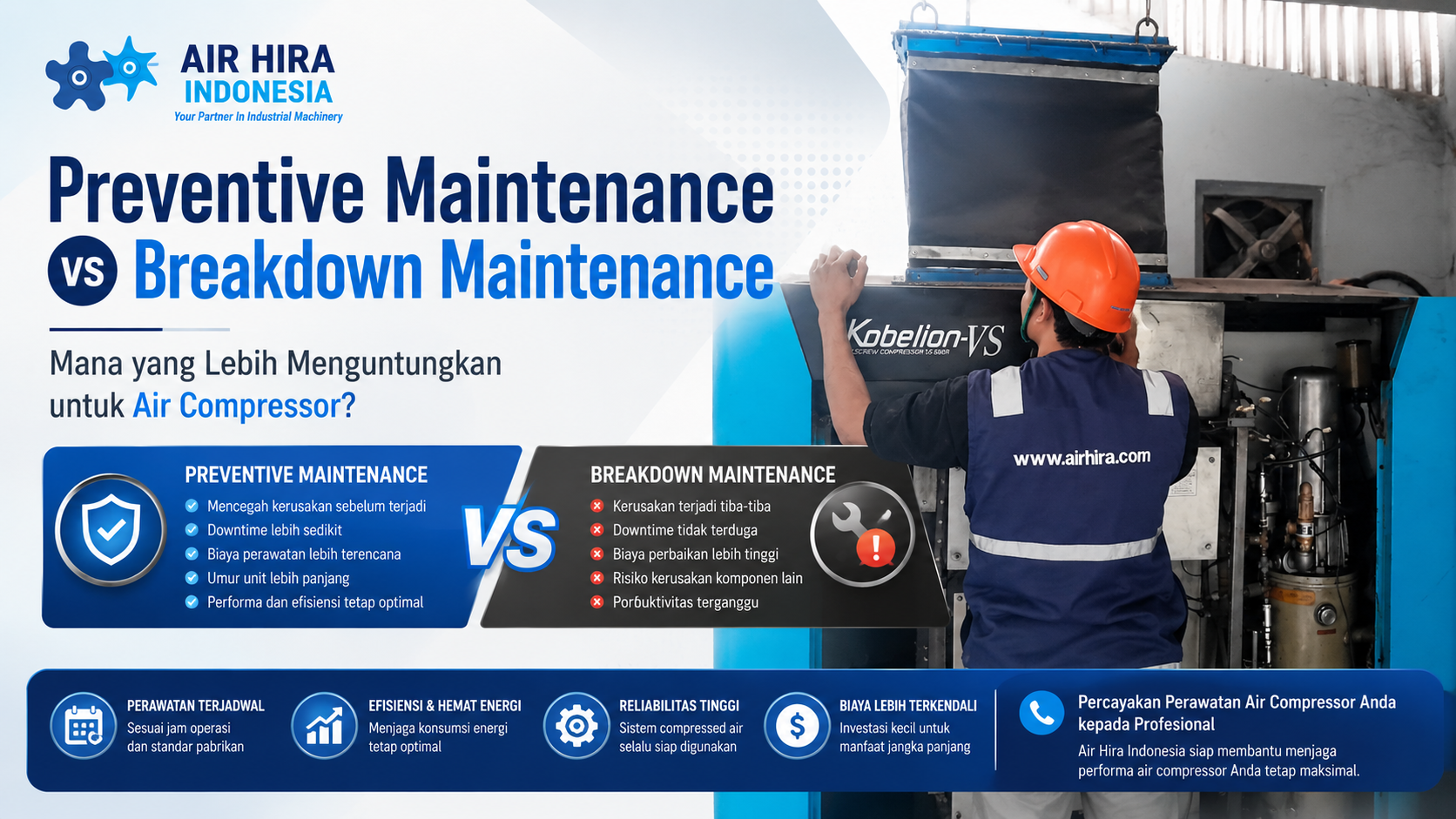
Many companies still rely on breakdown maintenance, repairing equipment only after it fails. In contrast, preventive maintenance (PM) focuses on servicing the compressor before problems occur, helping businesses avoid costly downtime.
What Is Preventive Maintenance?
Preventive maintenance is a scheduled maintenance program performed based on operating hours or a planned service interval.
Its key benefits include:
- Reduces the risk of unexpected breakdowns
- Extends air compressor service life
- Maintains stable performance and energy efficiency
- Lowers long-term maintenance costs
- Makes maintenance budgeting more predictable
What Is Breakdown Maintenance?
Breakdown maintenance is carried out only after the compressor stops operating or experiences a failure.
This approach often results in:
- Unplanned production downtime
- Higher repair and spare parts costs
- Increased risk of damage to other components
- Lower productivity
- Potential delays in customer deliveries
Which Maintenance Strategy Is More Cost-Effective?
Although preventive maintenance requires regular service, its overall cost is usually much lower than the expenses caused by unexpected equipment failures.
Routine maintenance also helps maintain stable air pressure, reduce energy consumption, improve compressor reliability, and minimize production interruptions.
Invest in Prevention, Not Repairs
Waiting until an air compressor breaks down can cost far more than maintaining it on schedule. A well-planned preventive maintenance program protects your equipment, reduces operating costs, and keeps your production running efficiently.
PT Air Hira Indonesia provides professional Preventive Maintenance, Air Compressor Service, Troubleshooting, Compressor Overhaul, Performance Inspection, and Compressed Air System Audit services to help industries improve equipment reliability, maximize energy efficiency, and minimize downtime.