

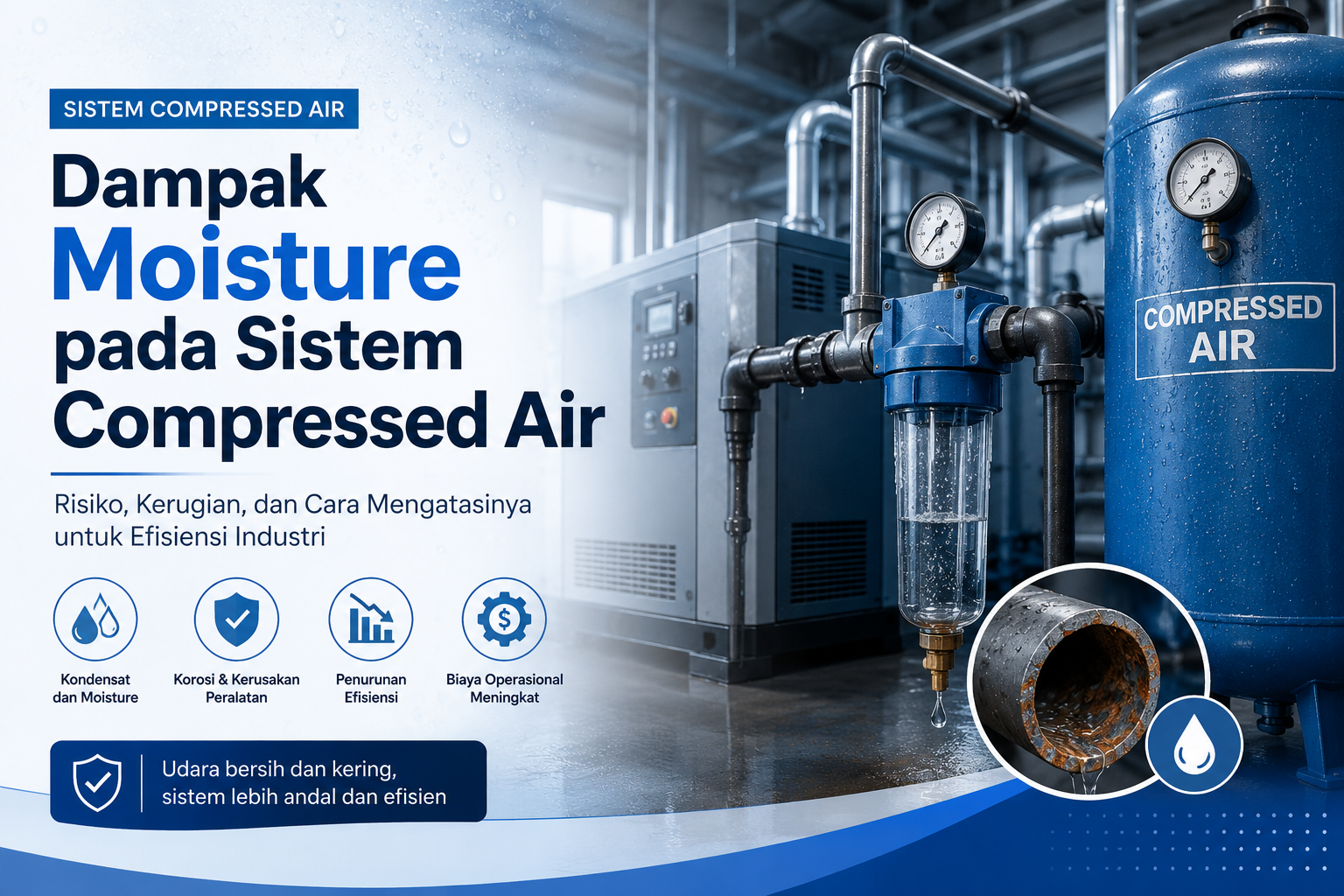

Compressed air is often referred to as the “fourth utility” in industrial facilities. However, many companies overlook one critical issue that can significantly impact productivity and operating costs: moisture in compressed air systems.
Without proper treatment, moisture can lead to equipment damage, product quality issues, and unexpected downtime. Understanding these risks is essential for purchasing teams, utility managers, and plant operators.
Where Does Moisture in Compressed Air Come From?
Atmospheric air naturally contains water vapor. When air is compressed, the concentration of moisture increases. As the compressed air cools down inside the system, this water vapor condenses into liquid water.
In fact, a compressor operating in humid environments can generate several liters of condensate every day.
Without an effective air treatment system, this moisture will circulate throughout the entire compressed air network.
Negative Impacts of Moisture in Compressed Air Systems
1. Corrosion in Piping and Equipment
Water inside pipelines can cause internal corrosion, leading to rust formation, pressure losses, and premature failure of piping systems, air receivers, valves, and pneumatic equipment.
Corroded piping may also contaminate the compressed air supply.
2. Reduced Reliability of Pneumatic Equipment
Moisture can damage pneumatic cylinders, actuators, solenoid valves, and air tools. This often results in frequent breakdowns, increased maintenance costs, and unplanned production interruptions.
3. Product Contamination
Industries such as food & beverage, pharmaceuticals, electronics, and automotive manufacturing require clean and dry compressed air.
Excess moisture can contaminate products, compromise quality standards, and potentially lead to costly product rejection.
4. Increased Energy Consumption
Wet compressed air reduces overall system efficiency. Water accumulation inside filters and piping creates additional pressure drop, forcing compressors to consume more energy to maintain required operating pressure.
Even a small pressure drop can significantly increase electricity costs over time.
How to Prevent Moisture Problems
The most effective way to eliminate moisture is by implementing a proper compressed air treatment system, including:
- Refrigerated Air Dryers for general industrial applications.
- Desiccant Air Dryers for critical processes requiring ultra-dry air.
- High-efficiency air filters to remove water, oil, and particulates.
- Proper condensate drainage systems.
- Routine inspection and preventive maintenance.
Selecting the right air dryer technology depends on the required air quality, pressure dew point, and application.
Why Air Dryers Are Essential for Industrial Facilities
Investing in a reliable air dryer system offers several long-term benefits:
✅ Protects compressors and downstream equipment.
✅ Reduces maintenance and repair costs.
✅ Improves product quality.
✅ Enhances system reliability and uptime.
✅ Reduces energy consumption and operating expenses.
Conclusion
Moisture in compressed air systems is a hidden threat that can affect productivity, product quality, and operational costs. By implementing the right air treatment solution, companies can protect their assets, improve efficiency, and ensure reliable plant operation.
For industries seeking optimal compressed air performance, selecting the appropriate air dryer and filtration system is a critical investment—not an expense.
SEO Keywords: moisture in compressed air, compressed air moisture problems, industrial air dryer, compressed air treatment, compressed air system efficiency, refrigerated air dryer, desiccant air dryer, compressed air filtration, industrial compressed air system.