

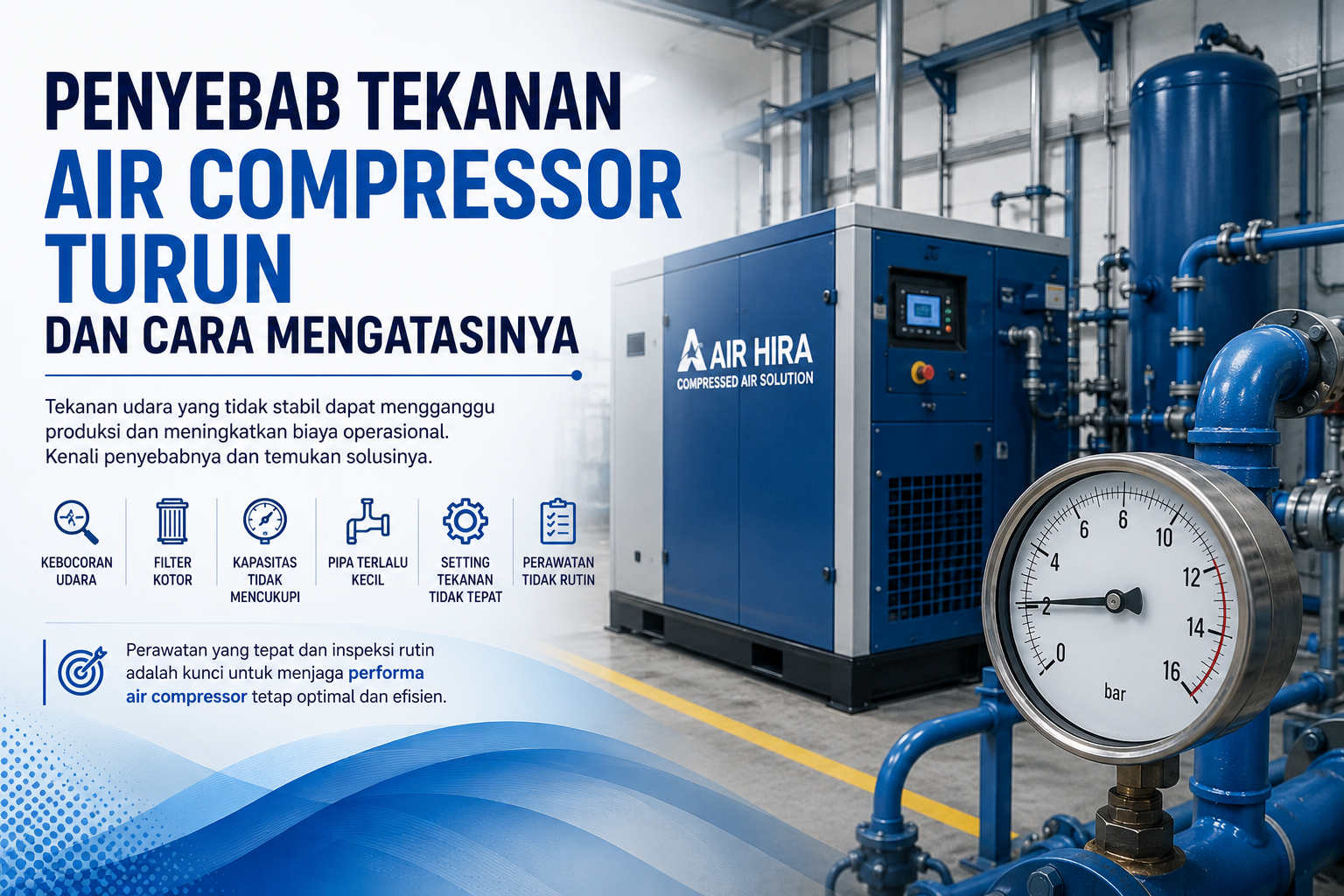

Low pressure in an air compressor system is one of the most common issues faced by industrial facilities. Unstable compressed air pressure can disrupt production processes, reduce the performance of pneumatic equipment, and increase energy consumption.
For purchasing teams, utility managers, and plant users, understanding the causes of low air compressor pressure is essential to maintaining operational reliability and avoiding unnecessary costs.
Below are some of the most common causes of pressure drop in compressed air systems and how to solve them.
1. Air Leaks in the Piping System
Air leaks are the most common cause of pressure loss in compressed air systems.
Leaks may occur in:
- Pipe connections
- Flexible hoses
- Fittings and valves
- Air receiver tanks
- Pneumatic equipment
Even small leaks can result in significant compressed air losses over time.
How to Fix It:
- Conduct regular leak inspections.
- Use an ultrasonic leak detector to identify hidden leaks.
- Repair or replace leaking components immediately.
2. Dirty Filters or Clogged Separators
Dirty filters restrict airflow and create excessive pressure drop within the system.
Components that should be inspected include:
- Air filters
- Oil filters
- Air/oil separators
- Line filters
If these components are not replaced according to the recommended maintenance schedule, downstream pressure will gradually decrease.
How to Fix It:
Replace filters and separators according to the manufacturer’s maintenance recommendations.
3. Insufficient Compressor Capacity
As production demand increases, compressed air consumption often grows as well. However, many facilities fail to increase compressor capacity accordingly.
As a result, air demand exceeds compressor supply.
Common Signs:
- The compressor continuously operates at full load.
- System pressure drops during peak production hours.
- Production is affected when multiple machines operate simultaneously.
How to Fix It:
Perform an air demand analysis to determine whether the existing compressor capacity is sufficient for current plant requirements.
4. Undersized Piping
Piping that is too small can restrict airflow and create excessive pressure losses.
The longer the piping network and the more bends it contains, the greater the pressure drop.
How to Fix It:
- Evaluate the current piping design.
- Use pipe diameters that match the required airflow.
- Consider implementing a ring main system to improve air distribution stability.
5. Incorrect Compressor Pressure Settings
Incorrect controller settings can also cause system pressure to remain below process requirements.
Parameters that should be checked include:
- Load pressure
- Unload pressure
- Pressure setpoint
- Sequencing system settings
How to Fix It:
Ensure that compressor pressure settings are properly configured according to process requirements and periodically verify controller parameters.
6. Lack of Preventive Maintenance
Poor maintenance practices can gradually reduce compressor performance.
Components such as the airend, valves, coolers, and sensors require regular maintenance to ensure optimal pressure generation.
How to Fix It:
Implement a comprehensive preventive maintenance program to maintain compressor performance and minimize unplanned downtime.
Conduct a Compressed Air System Audit to Identify the Root Cause
Low air compressor pressure is not always caused by the compressor itself. In many cases, the issue originates from air leaks, piping design problems, or increased air demand within the facility.
Performing a compressed air system audit on a regular basis can help companies identify the root cause, improve energy efficiency, and reduce operating costs.
PT Air Hira Indonesia provides professional services for air compressor maintenance, compressed air system audits, leak detection, piping installation, and preventive maintenance to help industries maintain reliable and energy-efficient compressed air systems.