

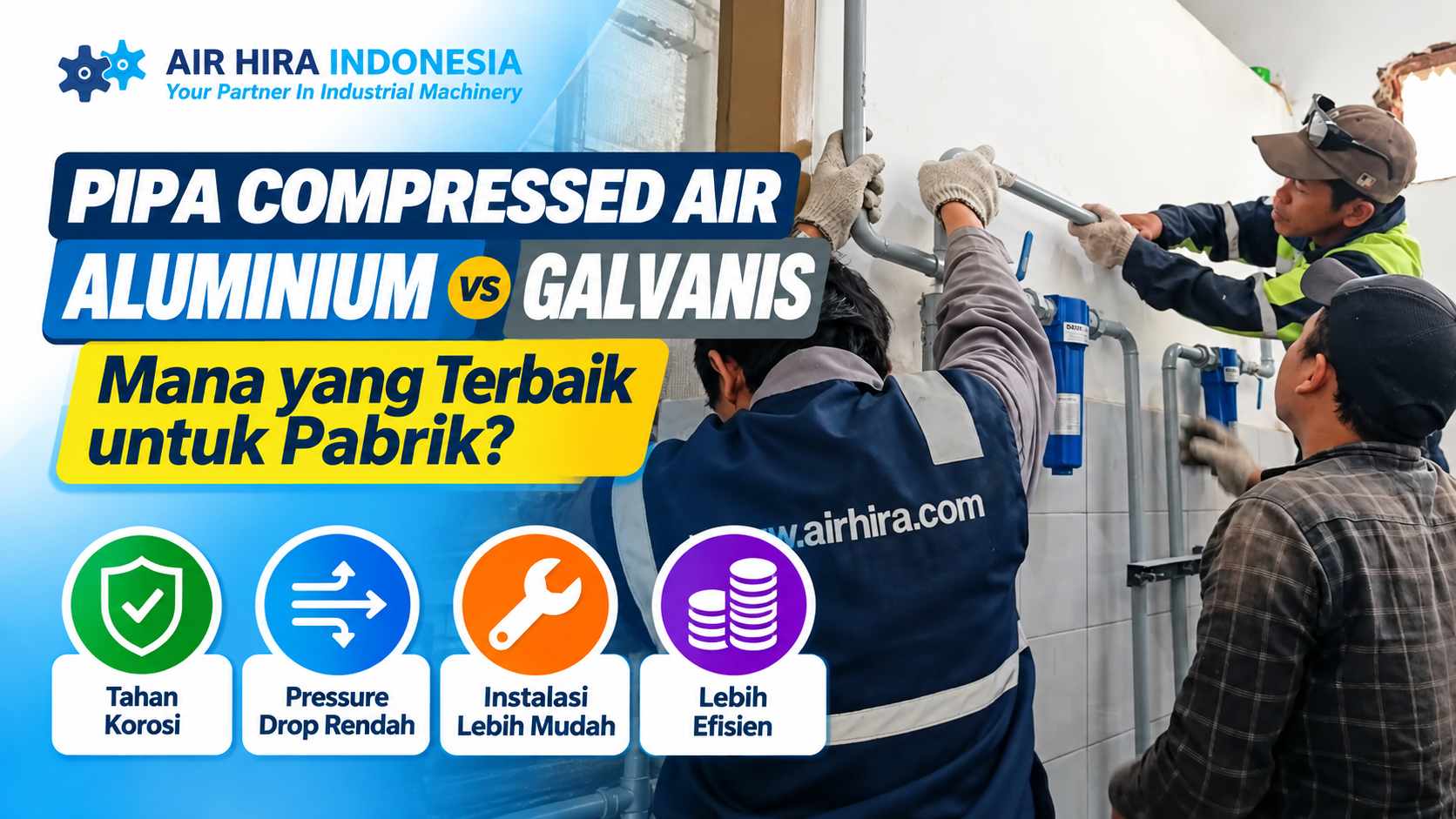

Choosing the right compressed air piping material affects air quality, pressure drop, installation costs, and long-term maintenance. For industrial facilities, aluminum piping and galvanized steel piping are two common options, but each has different advantages.
1. Aluminum vs. Galvanized Steel Pipe
Aluminum Pipe
- Corrosion-resistant: Helps prevent internal rust and particle contamination.
- Smooth inner surface: Reduces friction and helps minimize pressure drop.
- Lightweight and modular: Easier to install, modify, and expand.
- Consideration: Initial material costs may be higher, and pressure and temperature limits depend on the piping system.
Galvanized Steel Pipe
- Lower initial material cost: Often attractive for projects with limited budgets.
- Widely available: Common sizes and fittings are generally easy to source.
- Consideration: The protective zinc coating can deteriorate over time. Corrosion, deposits, and leaks at threaded joints may increase maintenance requirements and pressure losses.
These differences are consistent with technical guidance from Atlas Copco and Kaeser on compressed air piping materials. <Cite refs={[“turn772439search1″,”turn772439search0”]}/>
2. Which Pipe Is More Suitable for Your Factory?
For new compressed air installations, production lines, and facilities that may expand, aluminum piping designed specifically for compressed air is often a practical choice because of its corrosion resistance, low weight, and ease of modification.
Galvanized steel may remain suitable where initial material cost is a priority and the existing system is in good condition. However, evaluate its internal condition, joint integrity, and maintenance requirements before selecting it for a new installation.
3. What Should You Check Before Choosing?
Purchasing teams and utility managers should compare more than the price per meter. Consider:
- Required working pressure and temperature.
- Airflow demand and pipe diameter.
- Total piping length and allowable pressure drop.
- Installation labor, fittings, and future expansion.
- Moisture control, air quality, and lifecycle maintenance costs.
Important: Correct pipe sizing and layout are just as important as material selection. Even a corrosion-resistant pipe can cause pressure drop if it is undersized or poorly designed. Always verify the piping system’s pressure and temperature ratings with the manufacturer. <Cite refs={[“turn772439search22″,”turn772439search1”]}/>
Conclusion
For many modern industrial compressed air systems, aluminum piping offers advantages in corrosion resistance, installation flexibility, and long-term maintenance. Galvanized steel can still be considered when budget and existing infrastructure are key factors.
Air Hira Indonesia supports industrial compressed air systems, including compressor services, air treatment, and piping solutions to help improve operational reliability.
Air Hira Indonesia — Your Partner In Industrial Machinery
Website: www.airhira.com
WhatsApp: 08977600997
References
- Atlas Copco — What Type of Compressed Air Pipe Is Right for Your System?
- Kaeser Compressors — Compressed Air Piping System
- Compressed Air and Gas Institute (CAGI) — Compressed Air System Design Handbook