

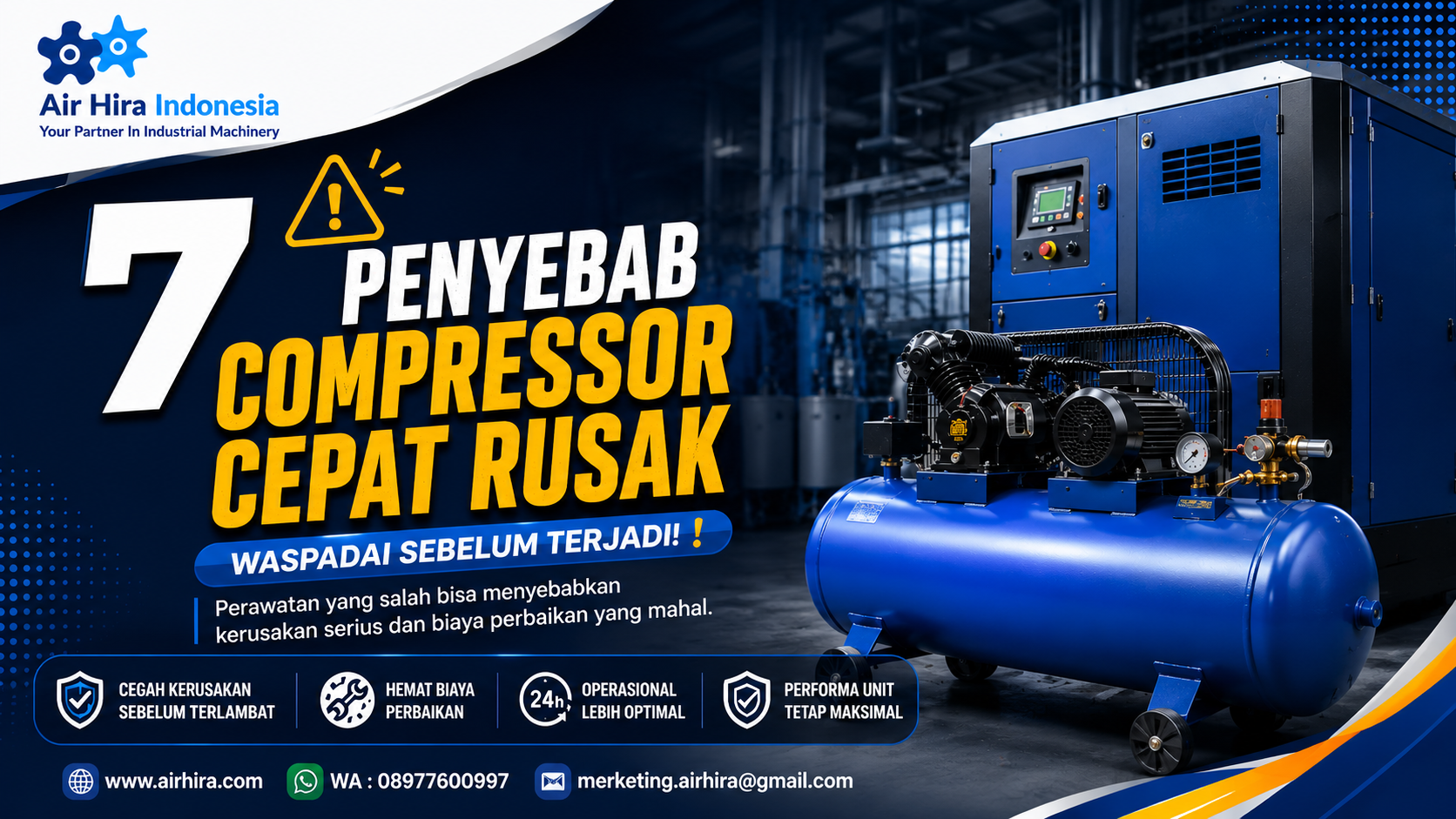

An air compressor is a vital asset in industrial operations. However, many compressor failures are caused not by equipment age, but by improper maintenance and operating conditions. Understanding the common causes of failure can help reduce downtime, lower repair costs, and extend equipment life.
Here are the seven most common reasons why air compressors fail early.
1. Poor Air Intake Quality
Dust, moisture, and airborne contaminants entering the compressor can damage internal components, clog filters, and accelerate airend wear.
Solution: Keep the air intake clean and replace air filters according to the recommended maintenance schedule.
2. Infrequent Maintenance
Skipping routine maintenance allows minor issues to develop into major equipment failures.
Solution: Perform preventive maintenance based on operating hours and follow the manufacturer’s service recommendations.
3. Poor Lubricant Quality
Using low-quality oil or operating with degraded lubricant reduces lubrication performance, increases operating temperature, and accelerates component wear.
Solution: Always use high-quality compressor oil that meets the manufacturer’s specifications and replace it on schedule.
4. Compressor Overloading
Running a compressor beyond its designed capacity for extended periods places excessive stress on the motor, airend, and electrical components.
Solution: Select the correct compressor capacity and regularly evaluate your compressed air demand.
5. Inefficient Cooling System
Dirty coolers, blocked ventilation, or inadequate airflow can cause excessive operating temperatures, leading to premature equipment failure.
Solution: Clean the oil cooler and aftercooler regularly and ensure proper ventilation in the compressor room.
6. Compressed Air Leaks
Air leaks force the compressor to operate longer than necessary, increasing energy consumption and reducing equipment lifespan.
Solution: Perform routine leak detection and repair leaks as soon as they are identified.
7. Improper Installation
Incorrect piping design, undersized pipelines, or poor installation practices can create pressure drops and reduce overall system efficiency.
Solution: Ensure the compressed air piping system is properly designed and installed according to industry standards.
Protect Your Air Compressor Investment
Most air compressor failures can be prevented through proper installation, high-quality consumables, and a well-planned preventive maintenance program. Regular maintenance not only extends equipment life but also improves energy efficiency and reduces operating costs.
PT Air Hira Indonesia provides professional Preventive Maintenance, Air Compressor Service, Compressor Overhaul, Leak Detection, Compressed Air System Audit, and Compressed Air Piping Installation services to help industries maintain reliable, energy-efficient, and high-performance compressed air systems.