

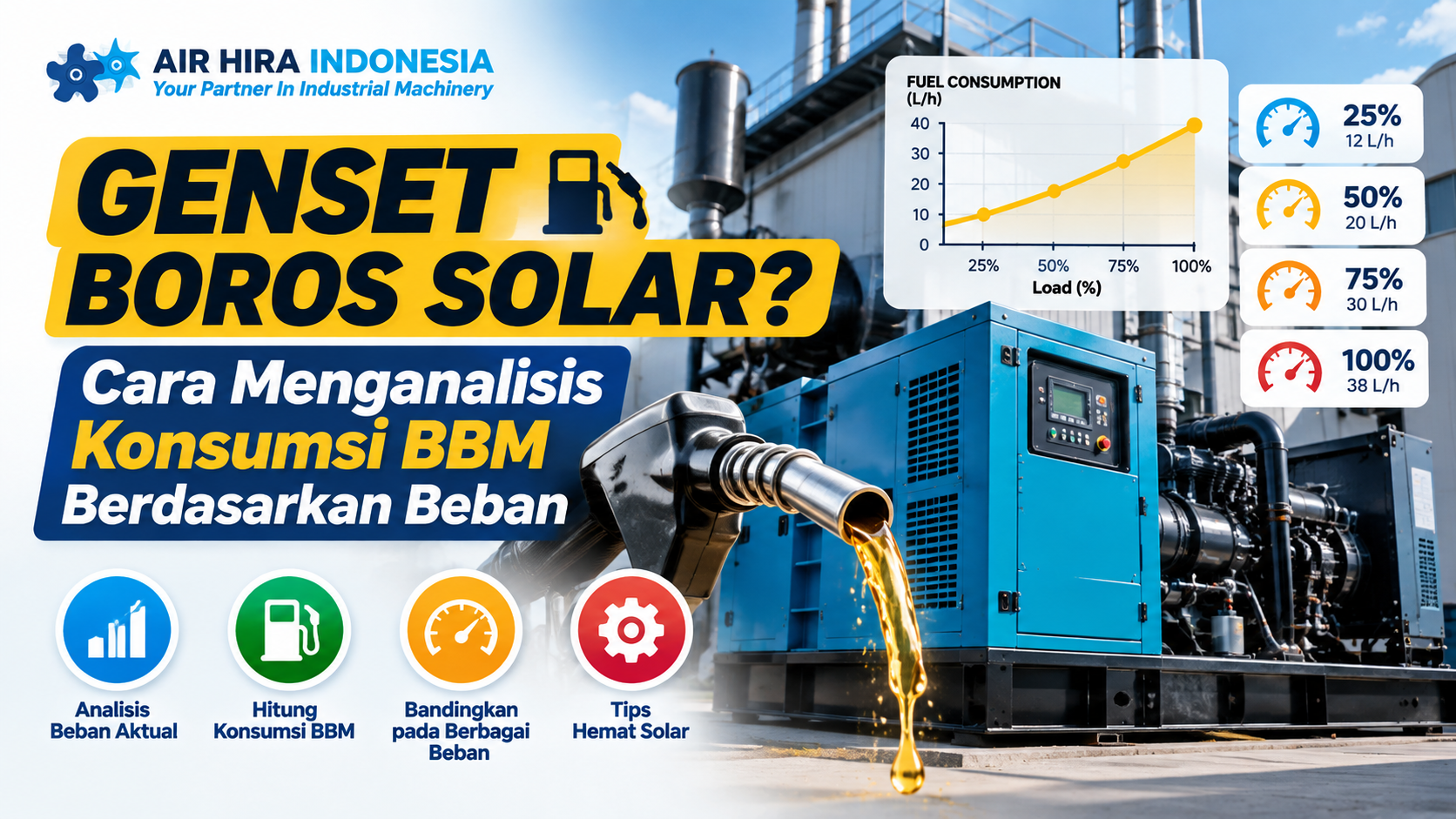

Diesel generator fuel consumption is not determined by generator capacity alone. The electrical load supplied by the generator has a major influence on fuel consumption and operating efficiency.
For Purchasing, Utility Managers, and industrial users, analyzing fuel consumption based on actual load can help identify inefficient operation and control operating costs.
1. Determine the Actual Generator Load
Start by measuring the actual electrical load while the generator is operating.
The basic calculation is:
Load (%) = Actual Load (kW) ÷ Generator Capacity (kW) × 100%
For example, a 500 kVA generator with a 0.8 power factor has approximately 400 kW of active power capacity. If the actual load is 200 kW, the generator is operating at approximately 50% load.
2. Measure Diesel Consumption
Record the amount of diesel consumed during a specific operating period.
Fuel Consumption (L/h) = Diesel Used (Liter) ÷ Operating Hours
This value shows how many liters of diesel the generator consumes per hour at a particular load.
3. Calculate Fuel Consumption per kWh
For a more meaningful efficiency comparison, calculate Specific Fuel Consumption (SFC):
SFC (L/kWh) = Fuel Consumed (Liter) ÷ Energy Generated (kWh)
This allows different operating conditions to be compared based on how much fuel is required to produce the same amount of electrical energy.
4. Compare Fuel Consumption at Different Loads
Measure generator performance at several load conditions, such as 25%, 50%, 75%, and 100% load.
Comparing the data can help identify the relationship between generator load and diesel consumption.
Fuel consumption does not always increase linearly with load because it can also be affected by engine condition, alternator efficiency, ambient temperature, fuel system condition, and maintenance.
5. Pay Attention to Low-Load Operation
A generator that is significantly oversized for the actual electrical demand may operate at low load for extended periods.
This can result in inefficient utilization of the generator and, for diesel engines, prolonged low-load operation may contribute to certain engine operating issues.
Therefore, generator capacity should be selected based on the actual load profile, operating pattern, and future power requirements, rather than maximum capacity alone.
6. Check Engine and Fuel System Condition
If fuel consumption increases while the electrical load remains similar, inspect components such as the air filter, fuel filter, injectors, turbocharger, cooling system, and combustion system.
Regular preventive maintenance helps maintain engine performance and keep fuel consumption within the expected range.
Conclusion
Determining whether a generator is consuming too much diesel requires more than simply checking how many liters of fuel are used. The analysis should consider generator load, operating hours, fuel consumption in L/h, and fuel consumption per kWh.
Accurate data can help Purchasing, Utility Managers, Maintenance teams, and industrial users evaluate generator efficiency and make better decisions regarding maintenance, load management, and generator capacity.
Air Hira Indonesia provides Generator Service, Preventive Maintenance, Load Testing, Commissioning, and Performance Checks to help industries maintain generator performance, reliability, and operational efficiency.
Your Partner In Industrial Machinery
🌐 www.airhira.com
📱 WhatsApp: 08977600997