

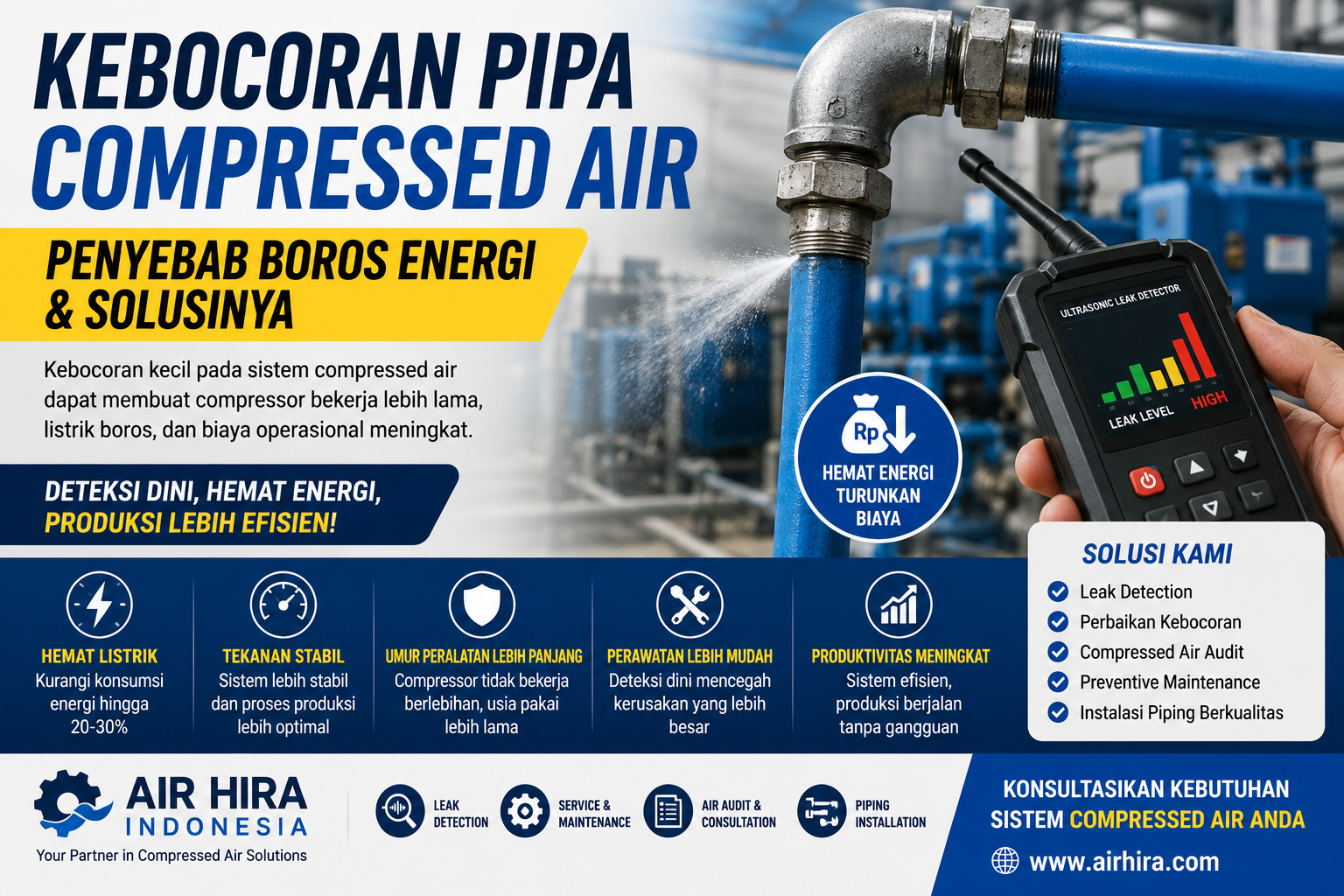

Compressed air pipe leaks are one of the largest sources of energy waste in industrial facilities. Even a small air leak can force an air compressor to operate longer, increase electricity consumption, reduce system pressure, and raise operating costs.
For purchasing teams, utility managers, and maintenance engineers, detecting and repairing compressed air leaks is one of the fastest ways to improve energy efficiency and reduce unnecessary expenses.
The Impact of Compressed Air Leaks
Ignoring air leaks can lead to several operational problems, including:
- Higher electricity consumption.
- Reduced compressed air pressure.
- Longer compressor running time.
- Shorter equipment lifespan.
- Lower production efficiency and productivity.
The larger the leak, the greater the energy loss and operating cost.
Common Causes of Compressed Air Leaks
The most frequent causes include:
- Loose pipe fittings and connections.
- Corroded or damaged piping.
- Worn flexible hoses.
- Faulty valves and seals.
- Poor compressed air piping installation.
Routine inspections can help identify these issues before they become costly problems.
How to Prevent and Fix Air Leaks
To maintain an efficient compressed air system, companies should:
- Perform regular ultrasonic leak detection inspections.
- Repair or replace leaking pipes, fittings, and valves immediately.
- Use high-quality compressed air piping materials.
- Implement a preventive maintenance program.
- Conduct a compressed air system audit to identify energy losses and system inefficiencies.
Leak Detection Is an Investment, Not an Expense
Repairing compressed air leaks is one of the most cost-effective ways to reduce energy consumption and improve system reliability. In many facilities, the savings from lower electricity usage quickly outweigh the cost of leak detection and repairs.
PT Air Hira Indonesia provides professional Leak Detection, Compressed Air System Audits, Air Compressor Service, Preventive Maintenance, and Compressed Air Piping Installation services to help industries reduce energy waste, improve compressed air efficiency, and keep production running reliably.