

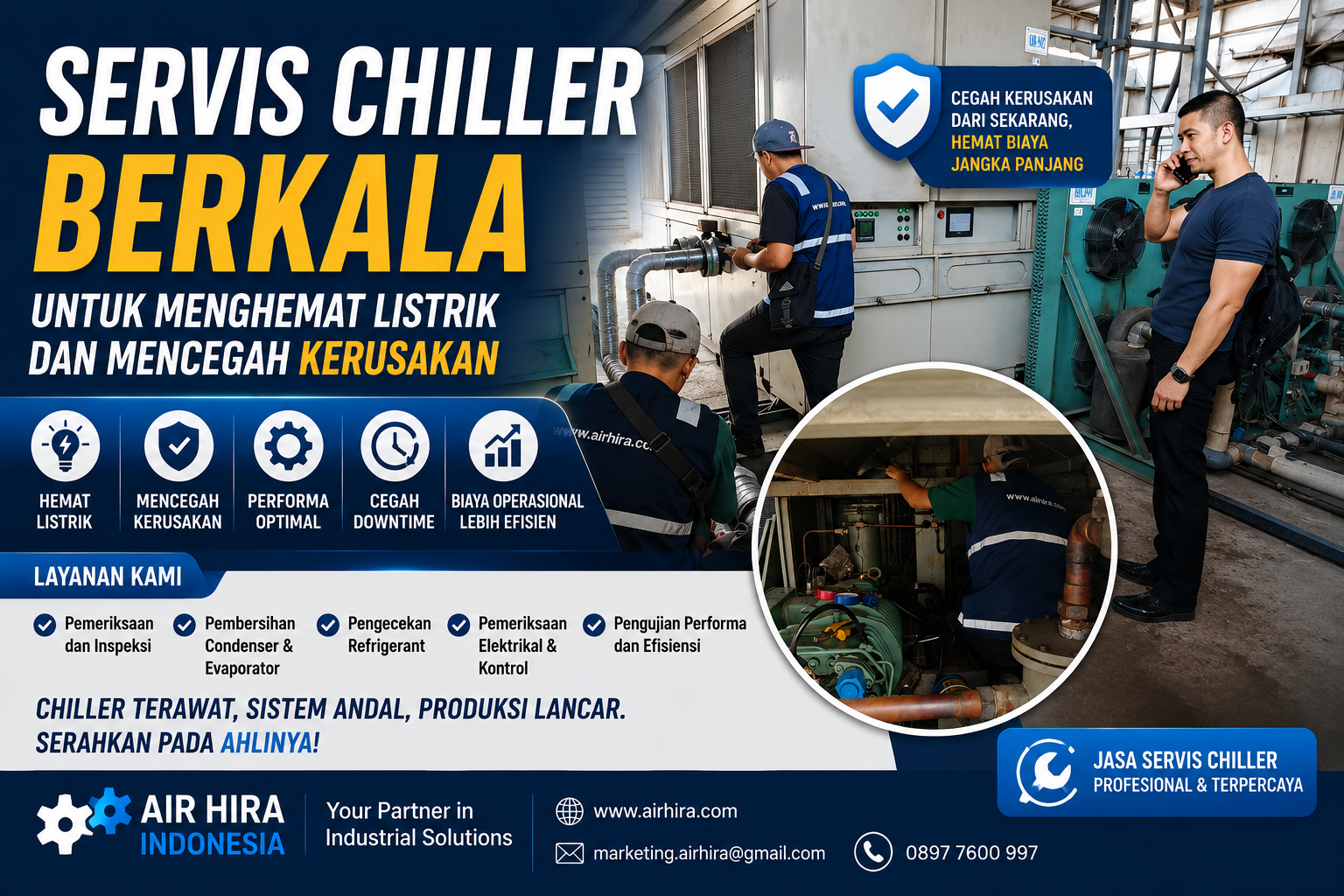

A chiller is one of the largest energy-consuming assets in industrial facilities. Without regular servicing, its performance gradually declines, electricity consumption increases, and the risk of unexpected breakdowns becomes much higher.
For purchasing teams, utility managers, and maintenance engineers, regular chiller service is not just routine maintenance—it is a smart investment that improves efficiency, reduces operating costs, and extends equipment life.
Why Is Regular Chiller Service Important?
Routine servicing ensures that every critical component operates efficiently and reliably.
The key benefits include:
- Reduces electricity consumption
- Prevents unexpected equipment failures
- Maintains optimal cooling capacity
- Extends compressor and component lifespan
- Lowers long-term maintenance costs
What Is Included in Chiller Service?
A professional chiller service typically includes:
- Cleaning the condenser and evaporator
- Checking refrigerant pressure and condition
- Inspecting motor current and voltage
- Examining pumps, fans, and control systems
- Testing overall chiller performance and efficiency
Regular inspections allow potential issues to be identified before they become major failures.
When Should a Chiller Be Serviced?
The service interval depends on operating hours, load conditions, and the working environment. However, preventive maintenance should be performed regularly to maintain cooling efficiency and prevent rising energy consumption.
Delaying maintenance often leads to higher repair costs and unnecessary production downtime.
A Small Maintenance Investment with Long-Term Savings
Routine chiller service helps reduce electricity costs, improve system reliability, and keep industrial operations running smoothly. Investing in preventive maintenance today can prevent expensive repairs tomorrow.
PT Air Hira Indonesia provides professional Chiller Service, Preventive Maintenance, Chiller Troubleshooting, Performance Testing, Condenser & Evaporator Cleaning, and Chiller Repair services to help industries maintain reliable, energy-efficient, and high-performance cooling systems every day.