

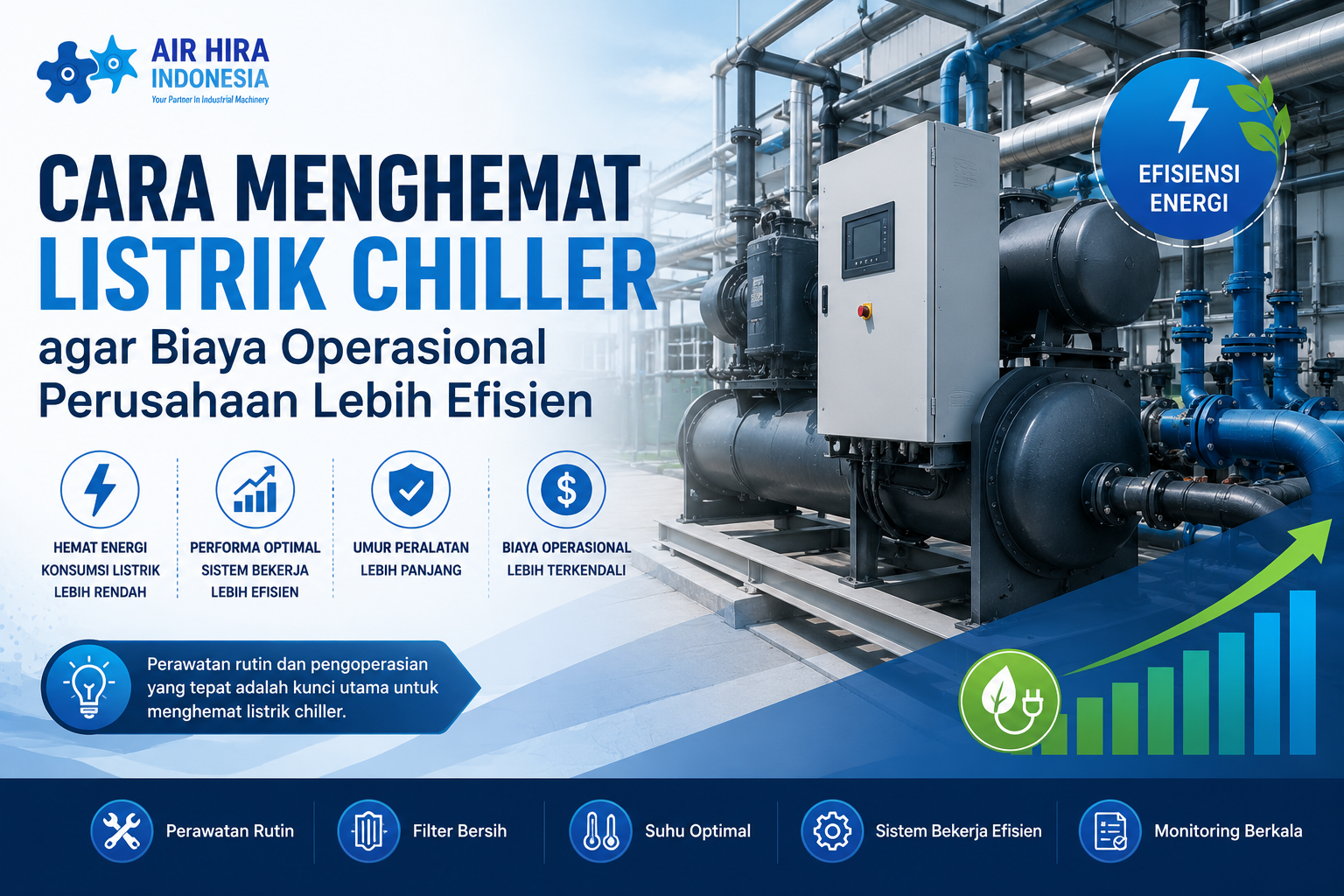

A chiller system is one of the largest electricity consumers in industrial facilities and commercial buildings. When a chiller is not properly operated or maintained, energy consumption increases significantly, leading to higher operating costs and reduced system efficiency.
For purchasing teams, utility managers, and plant operators, understanding how to improve chiller efficiency is essential for reducing energy costs while extending equipment lifespan.
Here are seven practical ways to reduce chiller energy consumption.
1. Clean the Condenser and Evaporator Regularly
Dirt and scale buildup on condenser and evaporator surfaces reduce heat transfer efficiency, forcing the chiller to work harder to achieve the desired cooling capacity.
This can result in:
- Higher electricity consumption
- Reduced cooling performance
- Shorter compressor lifespan
Routine cleaning helps maintain optimal chiller performance and energy efficiency.
2. Maintain Proper Cooling Water Temperature
For water-cooled chillers, excessively high cooling water temperatures increase compressor workload and energy consumption.
Ensure that the cooling tower, pumps, and water circulation system are operating efficiently to maintain the recommended cooling water temperature.
3. Clean or Replace Filters Regularly
Dirty air or water filters restrict airflow and water flow, reducing overall cooling efficiency.
Routine filter maintenance helps minimize system resistance, reduce compressor load, and lower energy usage.
4. Check Refrigerant Levels
Both undercharged and overcharged refrigerant conditions can significantly reduce chiller efficiency.
Perform periodic inspections to ensure refrigerant pressure and charge levels comply with the manufacturer’s specifications.
5. Optimize Chiller Loading
Chillers operate most efficiently when running near their optimal load range.
If cooling demand varies throughout the day, consider using a Variable Speed Drive (VSD) or an advanced control system to match chiller capacity with actual cooling requirements.
6. Implement Preventive Maintenance
A scheduled preventive maintenance program helps identify potential issues before they become costly failures.
Routine maintenance should include:
- Compressor inspection
- Refrigerant pressure checks
- Pump and cooling tower inspection
- Sensor and control calibration
- Performance testing
Regular maintenance improves system reliability while maintaining peak efficiency.
7. Monitor Energy Performance
Tracking electricity consumption and key operating parameters allows maintenance teams to identify efficiency losses before they become major problems.
Performance monitoring enables data-driven maintenance decisions that reduce energy costs and improve overall system reliability.
Energy Savings Start with Proper Chiller Maintenance
Reducing chiller energy consumption does not always require major investments. Regular maintenance, proper system operation, and continuous performance monitoring can significantly lower electricity costs, improve cooling efficiency, and extend equipment lifespan.
PT Air Hira Indonesia provides professional services for chiller preventive maintenance, condenser and evaporator chemical cleaning, performance testing, HVAC maintenance, and energy efficiency audits to help companies optimize cooling system performance while reducing operating costs.