

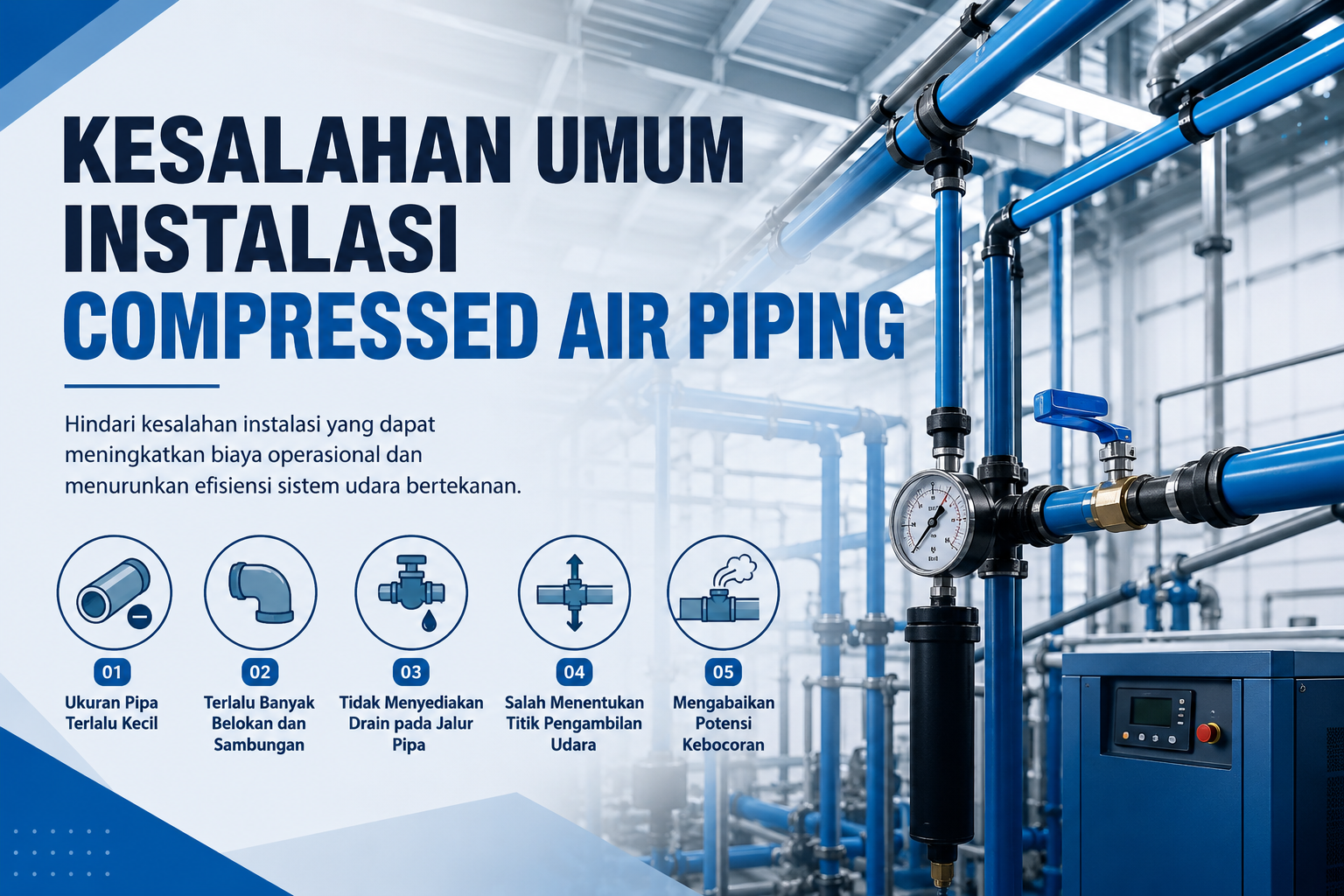

A well-designed compressed air piping system is essential for delivering stable air pressure, maintaining air quality, and improving overall plant efficiency. However, many industrial facilities still overlook proper piping design and installation, resulting in higher energy consumption, pressure losses, and increased maintenance costs.
Below are some of the most common compressed air piping installation mistakes that every purchasing team, utility manager, and plant user should avoid.
1. Using Undersized Piping
One of the most frequent mistakes is selecting a pipe diameter that is too small in an attempt to reduce initial investment costs.
Undersized piping creates excessive pressure drop, forcing the air compressor to work harder to maintain the required pressure at the point of use.
Impact:
- Increased energy consumption
- Reduced air capacity at production equipment
- Shorter compressor lifespan
Best Practice: Always size piping based on airflow demand (CFM or m³/min), operating pressure, and total pipe length.
2. Installing Too Many Bends and Fittings
Every elbow, tee, and fitting creates resistance within the piping system. Excessive bends can significantly increase pressure losses and reduce system efficiency.
Recommendations:
- Keep piping routes as short and straight as possible.
- Minimize the use of 90-degree elbows.
- Consider implementing a ring main system to ensure stable air distribution throughout the facility.
3. Failing to Provide Proper Drain Points
Compressed air naturally contains moisture. Without adequate drainage, condensate will accumulate inside the piping network.
Consequences:
- Internal pipe corrosion
- Poor air quality
- Damage to pneumatic equipment and production machinery
Ensure that all low points in the piping system are equipped with automatic drains or manual drain valves.
4. Incorrect Air Take-Off Design
Many installations take compressed air directly from the bottom of the main header. This practice allows condensate to flow directly into downstream equipment.
The recommended method is to use a top take-off arrangement, where air is taken from the top of the main pipe while condensate continues flowing to drain points.
5. Ignoring Air Leaks
Poor installation quality and loose connections are common sources of compressed air leaks.
Even a small leak can lead to substantial energy losses over time, increasing operating costs without adding any production value.
Leak Detection Methods:
- Ultrasonic leak detection
- Air consumption monitoring
- Periodic compressed air system audits
Proper Piping Design Saves Money
A compressed air piping system should be viewed as a long-term investment rather than simply a network of pipes. Proper design and installation can significantly improve energy efficiency, maintain air quality, and reduce overall operating expenses.
Before installing or modifying your compressed air system, consult with experienced professionals to ensure the system meets your plant’s operational requirements.
PT Air Hira Indonesia provides professional services for compressed air system design, piping installation, system audits, and energy optimization for various industrial applications.