

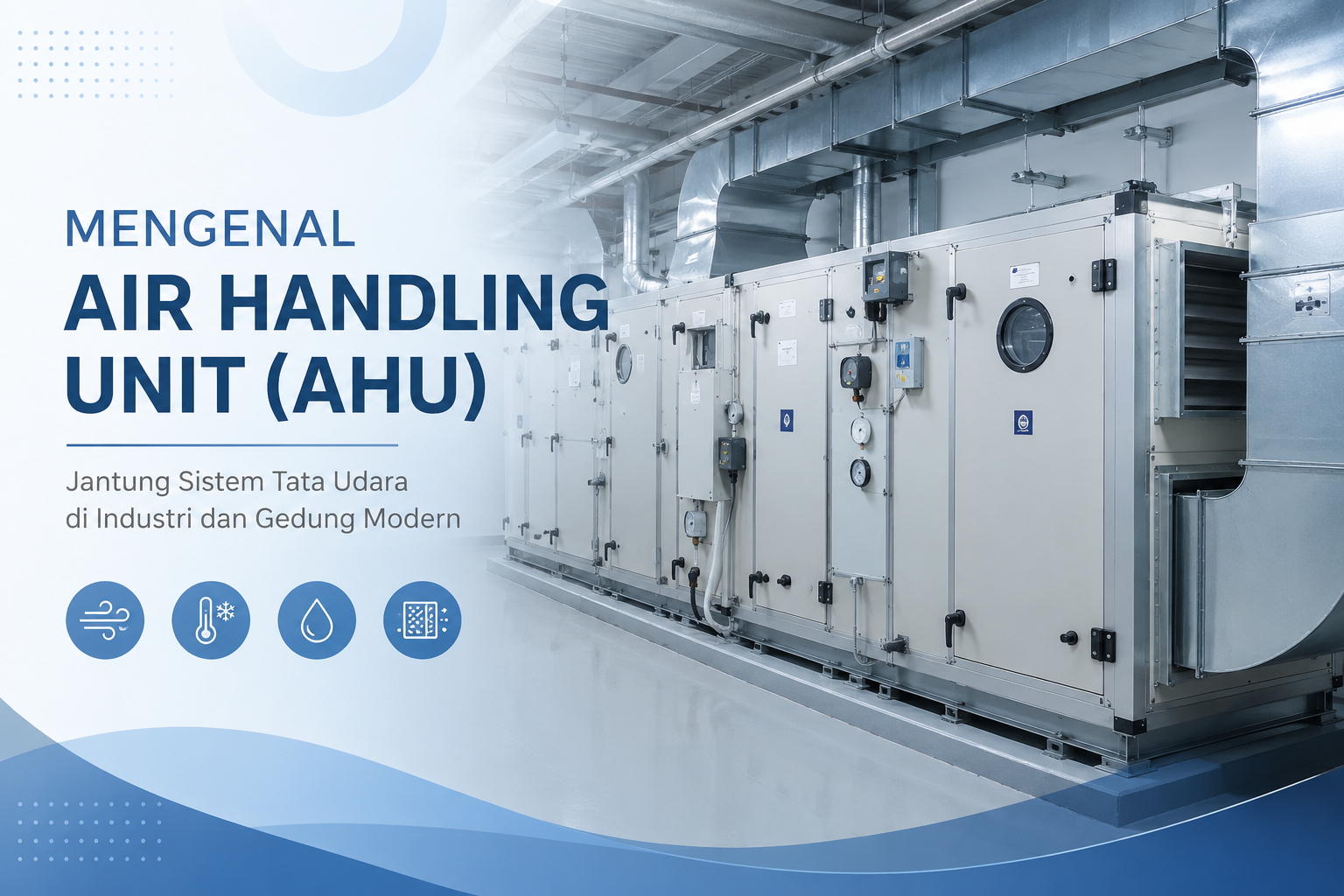

In today’s industrial facilities and commercial buildings, maintaining proper indoor air quality is essential for productivity, employee comfort, and operational efficiency. One of the most important components in an HVAC system is the Air Handling Unit (AHU).
But what exactly is an AHU, and why is it critical for industrial operations?
What is an Air Handling Unit (AHU)?
An Air Handling Unit (AHU) is a key component of an HVAC (Heating, Ventilation, and Air Conditioning) system that is responsible for conditioning and circulating air throughout a building or industrial facility.
The AHU helps regulate temperature, humidity, airflow, and air cleanliness, ensuring a comfortable and healthy indoor environment.
In simple terms, an AHU acts as the “heart” of an air distribution system, delivering conditioned air to different areas of a facility.
Main Components of an AHU
An Air Handling Unit typically consists of several important components:
1. Air Filters
Air filters remove dust, dirt, and airborne contaminants before the air is distributed throughout the building.
2. Cooling Coil
The cooling coil uses chilled water from a chiller system to reduce the temperature of the incoming air.
3. Fan or Blower
The fan moves conditioned air through ductwork and distributes it to designated spaces.
4. Dampers
Dampers regulate the amount of fresh outdoor air and recirculated air entering the system.
5. Humidity Control System
Some AHUs include humidifiers or dehumidifiers to maintain the desired humidity level for specific applications.
Why AHUs Are Important in Industrial Facilities
Air Handling Units play a critical role in various industries, including manufacturing, pharmaceuticals, food processing, electronics, hospitals, and commercial buildings.
Key benefits include:
- Improving indoor air quality.
- Maintaining consistent temperature and humidity levels.
- Reducing contamination risks in production areas.
- Enhancing employee comfort and productivity.
- Supporting compliance with industry standards and regulations.
- Improving overall HVAC system efficiency.
AHU vs. FCU: What’s the Difference?
Many people confuse an AHU with a Fan Coil Unit (FCU). While both are part of HVAC systems, they serve different purposes.
| Air Handling Unit (AHU) | Fan Coil Unit (FCU) |
|---|---|
| Designed for large-scale applications | Suitable for smaller areas |
| Serves multiple rooms or zones | Typically serves a single room |
| Advanced filtration and air treatment | Basic air circulation and cooling |
| Common in industrial and commercial facilities | Common in offices, hotels, and apartments |
The Importance of Regular AHU Maintenance
Like any critical equipment, AHUs require routine maintenance to ensure optimal performance.
Poorly maintained AHUs can lead to:
- Reduced air quality.
- Higher energy consumption.
- Inconsistent cooling performance.
- Increased operating costs.
- Premature equipment failure.
Regular inspection, filter replacement, coil cleaning, fan servicing, and system monitoring can significantly extend the life of the AHU while improving energy efficiency.
Conclusion
An Air Handling Unit (AHU) is a vital component of any HVAC system, responsible for controlling airflow, temperature, humidity, and air quality. For industrial facilities, investing in the right AHU system and proper maintenance can improve operational efficiency, reduce energy costs, and create a healthier working environment.
Whether for manufacturing plants, commercial buildings, or specialized facilities, a well-designed AHU system is essential for reliable and efficient air management.
Keywords: Air Handling Unit, AHU, HVAC System, Industrial AHU, Air Quality Management, HVAC Equipment, AHU Maintenance, Industrial Ventilation, Air Handling System.