


How to Choose the Right Industrial Air Compressor for Your Factory: Save Energy and Extend Equipment Life
Why Choosing an Industrial Air Compressor Matters
Many companies purchase an air compressor based solely on price or machine size without properly analyzing their actual production requirements. As a result, they often face excessive electricity consumption, unstable air pressure, frequent breakdowns, and higher maintenance costs.
In modern industries such as manufacturing, automotive, food processing, pharmaceuticals, textiles, and heavy workshops, air compressors play a critical role in daily operations. Selecting the right compressor directly impacts productivity, operational efficiency, and long-term business profitability.
A poorly selected compressor can significantly increase energy costs and create unexpected production downtime that disrupts business operations.
What Is an Industrial Air Compressor?
An industrial air compressor is a machine designed to generate compressed air for various industrial applications. Compressed air is commonly used to power pneumatic equipment, production machinery, packaging systems, cleaning processes, painting operations, and automated manufacturing lines.
Several types of industrial air compressors are commonly used today, including:
Screw Air Compressors
Piston Air Compressors
Oil-Free Air Compressors
Variable Speed Drive (VSD) Compressors
Each type offers different advantages depending on the operational requirements of a facility.
1. Determine Your Required Air Pressure
The first factor to consider is the required operating pressure. Air pressure is typically measured in:
Bar
PSI (Pounds per Square Inch)
Most industrial facilities operate within a pressure range of 7 to 10 bar, although certain specialized applications may require higher pressure levels.
Insufficient pressure can cause:
Reduced machine performance
Disrupted pneumatic systems
Lower production efficiency
Excessive pressure may result in:
Increased energy consumption
Faster component wear
Higher risk of equipment damage
Conducting a proper site assessment before purchasing an air compressor helps ensure the correct pressure specification is selected.
2. Calculate the Required Air Flow Capacity
Besides pressure, airflow capacity is equally important. Airflow represents the volume of compressed air required by production equipment and is generally measured in:
CFM (Cubic Feet per Minute)
m³/min (Cubic Meters per Minute)
When airflow capacity is too low:
Air pressure drops during operation
Production equipment experiences errors
Manufacturing processes become unstable
When airflow capacity is oversized:
Electricity consumption increases unnecessarily
Compressors frequently unload
Overall system efficiency decreases
Ideally, compressor capacity should be calculated based on the total air demand of all equipment, plus an additional safety margin of approximately 20%.
3. Select the Appropriate Compressor Type
Screw Air Compressors
Screw compressors are among the most widely used solutions for industrial applications because they offer:
Continuous 24-hour operation capability
Stable performance
Lower noise levels
High efficiency for large-scale production
They are ideal for:
Manufacturing plants
Food and beverage industries
Large workshops
Automotive facilities
Piston Air Compressors
Piston compressors are commonly used for smaller-scale or intermittent applications.
Advantages include:
Lower initial investment
Suitable for light-duty operations
However, they are generally not recommended for continuous industrial use.
Oil-Free Air Compressors
Oil-free compressors are essential for industries that require contaminant-free compressed air, such as:
Pharmaceutical manufacturing
Healthcare facilities
Food and beverage production
Electronics manufacturing
4. Consider Energy Consumption
Electricity costs often represent the largest operational expense associated with air compressor systems.
To improve energy efficiency:
Use VSD (Variable Speed Drive) compressors when production loads fluctuate
Ensure proper compressor sizing
Avoid excessive pressure settings
Perform regular preventive maintenance
Install high-quality air dryers and filtration systems
An energy-efficient compressor system can reduce annual electricity expenses significantly and improve overall operational performance.
5. Pay Attention to Air Treatment Systems
Many companies focus only on purchasing a compressor while overlooking air treatment components. However, air quality is essential for maintaining product quality and protecting production equipment.
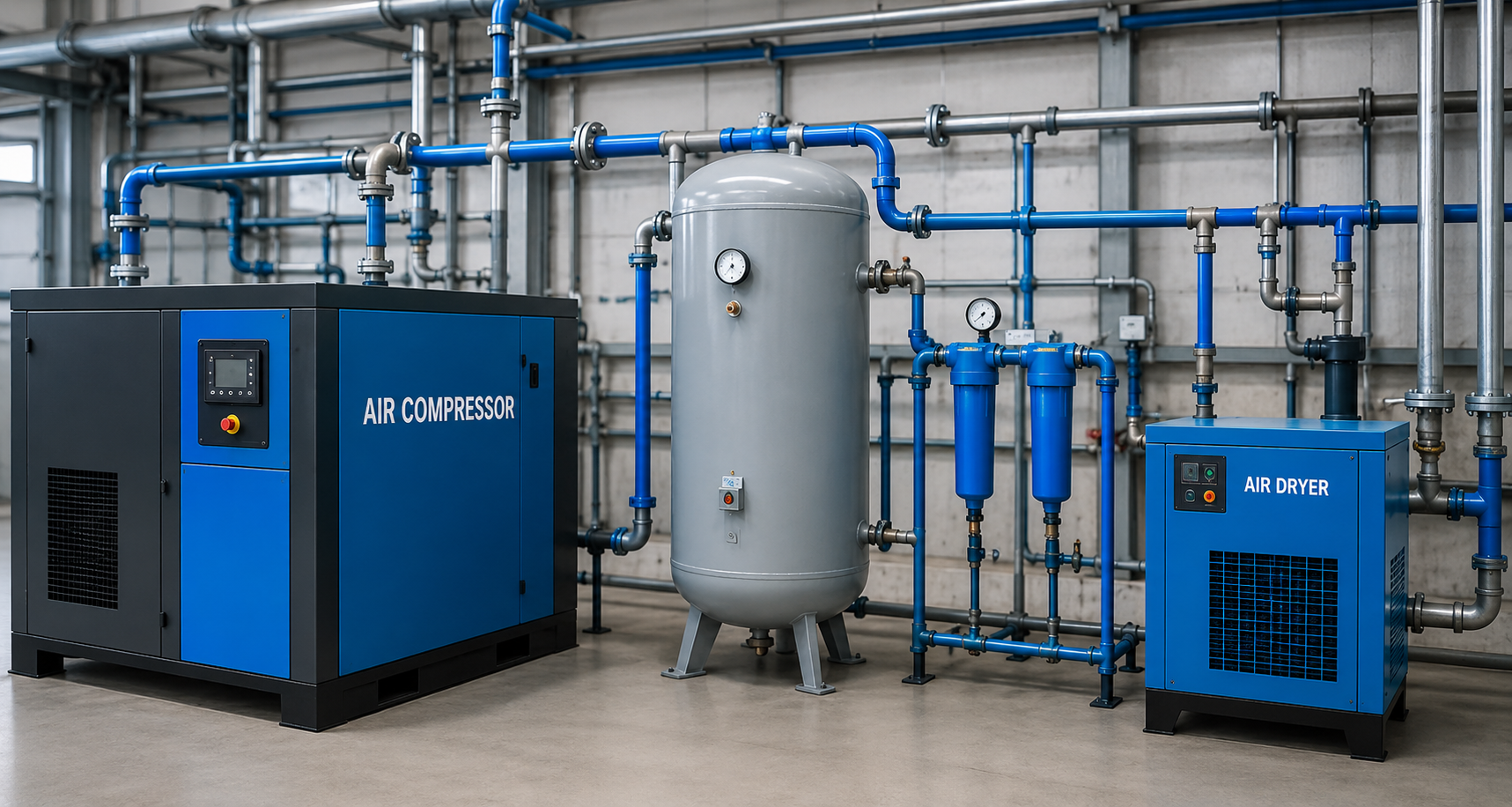
A complete compressed air system should include:
Air Dryers
Air Filters
Air Receiver Tanks
Proper Piping Systems
A well-designed air treatment system helps extend equipment lifespan, improve product quality, and reduce maintenance costs.
6. Choose an Experienced Air Compressor Supplier
Selecting the right supplier is just as important as choosing the right compressor.
A reliable supplier should provide:
Experienced technical support
Readily available spare parts
Preventive maintenance services
Emergency service support
Professional industrial consultation
Working with a trusted supplier helps minimize downtime and maximize equipment reliability.
Benefits of a Properly Designed Compressed Air System
When the correct compressor and supporting equipment are selected, companies can achieve:
Lower electricity costs
Improved production stability
Reduced maintenance expenses
Longer equipment lifespan
Higher operational efficiency
Less unplanned downtime
Conclusion
Choosing an industrial air compressor should never be based solely on price or machine size. Companies should carefully evaluate several factors, including:
Operating pressure requirements
Airflow demand
Compressor type
Energy consumption
Air treatment systems
Maintenance and technical support
A properly selected compressed air system will help factories operate more efficiently, reduce energy waste, improve productivity, and ensure long-term equipment reliability.
Investing in the right air compressor solution today can generate substantial operational savings and business benefits for years to come.